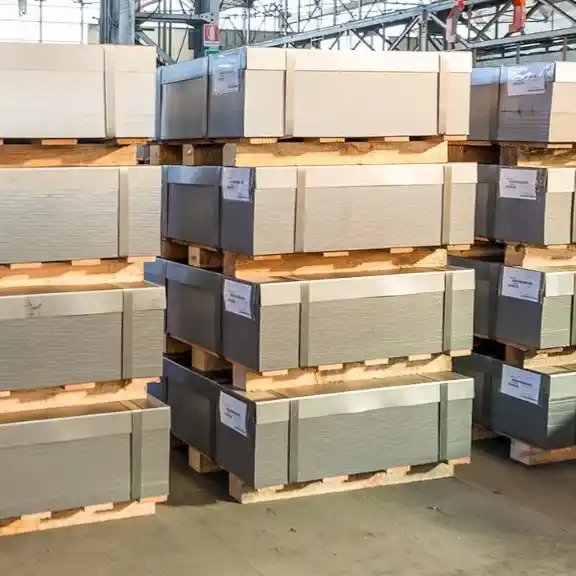
Transfer freight in, out, and on its way with minimal time in between. Our cross docking services are designed for shippers who can’t afford freight sitting still.
Cross docking logistics works when freight moves fast. Every process at our cross dock facility is built to get pallets off one trailer and onto the next with as little handling as possible.
Minimal Dwell Time
Freight moves through, not into long-term storage.
Real-Time Visibility
Clear tracking on every transfer load, in and out.
Fewer Touches
Less handling means less damage and fewer errors.
Scalable Capacity
Space and labor that flex with seasonal freight surges.
Efficient Transfers
Coordinated dock scheduling that minimizes wait time.
Flexible Freight Options
Full truckload, LTL and final-mile delivery from one team.
The R.C. Moore Difference
“Their dedication and reliability have been invaluable to us, and we look forward to continuing this successful partnership for many more years to come.”
– 24+ Year Customer
“Friendly and professional carrier to work with. We look forward to booking more loads in the near future.”
– 6+ Year Logistics Partner
“R.C. Moore has played a key role in our growth over the last 4 years. Their dedication to our business and ability to execute at a high level is why we look forward to continuing our partnership with them in the future.”
– 4+ Year Customer
Who we work with
Cross dock solutions for B2B shippers and distributors who need freight transferred, not stored.
Beverage and CPG brands managing high-volume, fast-turn freight
Distributors consolidating loads across multiple carriers
Manufacturers coordinating between suppliers, co-packers, and retail DCs
Brands scaling distribution in the Northeast, Mid-Atlantic, or Midwest
A cross dock warehouse, built into a bigger system
Our 3PL cross docking runs alongside warehousing and transportation, so a transfer load can become a stored load, or a stored load can become a transfer, without switching vendors.
Transportation
Coordinated dock scheduling between inbound and outbound carriers
Dedicated and regional transportation for repeat lanes
Real-time dwell and carrier tracking
Seasonal surge planning
Transfer & Tracking
Short-term staging when a transfer needs a buffer
Real-time visibility across the transfer, from dock in to dock out
Retail ASN and EDI integrations for coordinated hand-offs
Custom Services
Pick/pack and cartonization for split loads
Quality control inspection during transfer
Custom labeling and relabeling
SKU-level kitting
Positioned for the handoffs
Terminals positioned to keep freight moving across the U.S., without missed windows or surprise dwell fees.
Terminals in Maine, Pennsylvania, and North Carolina, each set up for transfer freight
Facilities built for palletized, high-velocity loads
Coordinated scheduling that keeps inbound and outbound trailers aligned
68
Years of Experience
100k+
Annual Shipments
99%
On-Time Performance
How is warehouse cross docking different from traditional warehousing?
Traditional warehousing stores freight until it’s ordered. Warehouse cross docking skips storage. Freight is unloaded, sorted, and loaded onto outbound trailers, often within hours.
Do you cross dock LTL freight into truckload shipments?
Yes. We consolidate smaller LTL loads into full truckloads at the dock, which cuts per-unit freight cost and reduces the number of carriers touching a shipment.
Do you run cross docking on backhaul lanes?
Yes, where the lane supports it. Backhaul cross docking cuts empty miles and can bring transportation costs down on repeat routes.
Can you coordinate cross docking around retailer delivery windows?
Yes. Dock scheduling is built around the receiving windows and compliance requirements of the retailers and distributors on the other end, not just our own throughput.
What’s a typical dwell time on a cross dock transfer?
Most transfer loads move in hours, not days. Exact turn time depends on freight type, dock availability, and how tightly the inbound and outbound schedules line up.
Is there a minimum volume to set up a dedicated cross dock lane?
It depends on frequency and lane consistency more than raw volume. A shipper moving smaller loads on a predictable, recurring lane is often a better fit than one large infrequent load.
Get a Quote
We’re here to help! Contact us at (980) 276-4018 or use the form below to learn how we can support your business.
Our locations
Positioned for efficiency with coverage across the U.S.